Sunday, 28 September 2014

Rabies!


As my nod to the fact that it's World Rabies Day today  (the 28th September), I'm taking a look at the changes to pet travel legislation that comes in at the end of this year.

There's a very good overview of the current situation here, care of The Animal Welfare Blog but, in brief, Rabies-susceptible animals are prevented from entering the UK unless they have an import license, or are exempt from needing a licence because they are being moved under the Non-Commercial Movement of Pets Order 2011, which mainly covers animals travelling under the EU Pet Travel Rules.

As of 29th December 2014, the Pet Travel rules are being slightly updated to strengthen enforcement of compliance with the rules and to harmonise the rules across EU countries. There will be a new style of passport with more detail in it, but if the animal already has a passport it doesn't need to get a new one (unless all the treatment spaces in it get filled in). The new passport needs the vet to fill out their details on the passport, and include their contact details when certifying vaccinations and treatments.

The other changes are:

All countries in the EU are now required to carry out checks on pet movement. As such, it's likely there will be more checking of passports at other borders, and the animal must be fully compliant with the terms of the travel rules before leaving the UK. This means that the Rabies vaccinations must be carried out 22 day before the travel date (vaccination date is day 0, and then there needs to be 21 days between vaccination and travel)

A minimum age for travel - under the old rules, the puppy or kitten had to be 12 weeks before the vaccination was given, because there are no vaccinations available for animals under that age. However, individual countries could allow in unvaccinated animals under that age that were travelling with their mother or had never left their place of birth and so couldn't have been exposed to Rabies. Whether to keep this option is now under discussion, primarily because it could only apply from one Rabies-free EU state to another, and definitions of "Rabies-free" vary.

Transporting of more than five animals now needs to take place from a registered place, using an authorised transporter and with their movement logged on the TRACES system (the EU import and animal movement tracking system). However (as before) this is not required if the animals are travelling to shows though owners will now need to carry evidence of the need for the exemption (details of the show and of their entry) and may be asked to sign a declaration that the animals are eligible to make use of this exemption.[NB as of August 2014 the exact nature that this declaration will take is still being finalised]

If the animal travels separately from the owner (eg by freight) pet and owners now need to travel no more than five days apart - at the moment there is no time constraint

Finally, the definition of animals allowed to travel under the Pet Travel Rules has been updated to make it specifically the domestic dog (Canis lupis familiaris), domestic cat (Felis silvestris catus) and domestic ferret (Mustela putorius furo). This is to prevent wild animals being moved under rules designed for pet transport. In practice, this will only affect owners of hybrid animals such as wolfdogs, or owners of certain cat breeds such as the Bengal (Felis lybica) or Savannah (Felis catus x Leptailurus serval)

More detail on the changes is available from DEFRA for pet owners, and for vets from the BVA.


Thursday, 25 September 2014

Wet Nose Day! 26th Sept 2014

Wetnose Animal Aid was founded back in 2000 to provide support and assistance to smaller rescues that are buckling under the pressure of vet and food bills as more animals need rescue places and there is less cash available to go round. They don't have any animals directly in care themselves, but instead, raise money which can be passed to those rescues in need to help them care for sick and vulnerable animals both nationally and internationally.


Modelled on the human "red nose day", it's "Wet Nose Day" tomorrow and just as with the human variety, you can get black noses to show your support on the day. I decided Daisy and Cybi's noses were wet enough - especially Cybi who has a knack of sneaking up and plonking his wet nose on my leg or in my hand (thanks, bud!) - but I have acquired a couple for myself. I'm sure I shall model them in due course.

Monday, 22 September 2014

Watching your dog work

While I was hobbling around on crutches, my dogs went off to an agility foundations training camp without me. Or at least, they were worked by one of the instructors, and I sat in a lawn chair with my feet up.
It's a fascinating experience, being able to watch your own dogs work, especially when I was watching someone who is extremely experienced coax exercises out of a dog they don't know. In fact, it was pretty difficult to tear my attention away from what my dog was up to for long enough to watch how they were being worked to try to pick up positioning and cueing tips.


What was interesting was that Daisy worked far, far better for the female instructor. She was polite when worked by the male instructor, and did as she was told, but it was a noticeably more restrained, and less engaged experience with far less enthusiasm. Cybi, on the other hand, was completely the opposite. He seemed to respond better to a more assertive handling style, and got a bit silly if not being given very precise, firm instructions with few extra comments. I tend to default to working Cybi the way I work Daisy (very light commands, lots of happiness, occasional stops mid exercise for a "well-done" cuddle...) and it looks like I might be doing him a disservice by not working to his learning strengths.


Friday, 19 September 2014

Kids and Dogs

When I got Daisy at 14 weeks I had lots of plans for puppy socialising that involved taking her to meet lots of people, going for walks on busy streets so she could learn what buses were, making sure she met lots of older dogs and so on. One area that I did not think specifically about was making sure she met kids - I don't have children myself, and so don't really interact with them very much. She met plenty of tweens and older, not least because random passers by wanted to play with the puppy but wasn't really exposed to anyone under the age of about 12. Fortunately, it turned out ok, and the very first time she did meet a five year old, she instantly identified a playmate and the pair of them ran around like idiots under the watchful eye of the child's mother and me. Later on, she met my friend's toddler, again under very close supervision, and seemed to know instinctively to be very quiet and calm around him (though she did give him lots of kisses, which he seemed remarkably nonplussed by).

Cybi is a different matter. He came to me at 7 months old, by which time he was already a decent size. He's pretty boisterous, and not jumping up is still a work in progress - and he was born in a very quiet and rural area (he's a failed sheepdog). I can only assume he had never met children before he arrived with me, but we live near a school and there have been a couple of occasions now where kids walking home have invaded his personal space while we've been out. We're working on it, as obviously it isn't a good thing that he feels threatened by young children (and he's so silly that if he realised they were fun to be around he could have an ace time playing with them) but I've been a little bit surprised by the attitudes of both parents and older kids (which I assume comes from the parents) around dogs they don't know. Maybe it's the default assumption that all dogs are friendly, but there have been times when I have actually had to put myself in the way, and explain to a parent that their child should not continue to approach my dog while he is retreating behind my legs and even starting to growl. Most of them have been ok with it, if a little surprised (and I always feel very rude saying "no, I'm sorry your child can't stroke my dog") but the odd one has suggested that it's in some way my fault that I need to fend off their small child because my dog isn't totally kid safe. And it's always the ones who come rushing in arms outstretched and looming over the dog, generally while making some kind of a loud noise, that have the parents who take it personally that I'd prefer my dog stayed away from their child! Sigh.

Anyway, the RSPCA has recently started an education campaign aimed at parents, to try to decrease the risk to children. It's not quite the same as my situation, in that it's primarily aimed at people who have both kids and dogs, but I can't help but feel that if it was circulated widely it might help my cause with Cybi while I continue to work on him.


RSPCA dogs and children infographic
Dogs and children - an infographic created by the RSPCA

Tuesday, 16 September 2014

All the things for all the pets...in one place!

All photos by PATS
I was fortunate enough to be able to attend the PATS trade show this weekend as part of my day job. I generally work more on veterinary products and services, so to be able to get a look at the advances and innovations in the pet world was pretty awesome. Exhibitors ranged from the large distributors down to the little "single-product" manufacturer (seriously, who wouldn't want a Mr. Men poo bag dispenser?)

I also got to listen to a half hour talk by Dr. Roger Mugford, founder of The Company of Animals, and probably one of the reasons I got interested in animal training and welfare in the first place. I was given his book, Dr Mugford's Casebook when I was....not very old (it was around 20 years ago!), and it sparked a lifelong interest in animal behaviour. Dr. Mugford's methods sit very much in the middle of the two styles of dog training that we see on the TV - the "positive only" at one extreme and the "dominance based" at the other, but I have noticed that in some quarters his methods have passed out of favour. My understanding is that he is what I would term a "balanced" trainer, in that he advocates the use of both positive and aversive methods in training, but as he was at pains to stress during his highly entertaining and informative talk, "aversive" is not the same as "punitive" - merely withdrawing attention from a misbehaving dog is sufficiently aversive if they are sensitive to human affection (as most family pets are). I think in the wider pet training community often punitive and aversive have come to mean the same thing, and so almost by definition if you are not a "positive only" trainer you are an advocate of the use of physical punishment. And while I personally would never lay a hand on my dogs, I wouldn't think twice about withdrawing affection or offering a verbal rebuke if my pair were knowingly misbehaving. Which to be fair to them they don't do very often - it's more likely to be insufficiently reinforced training, misunderstanding or my lack of supervision that leads to them metaphorically heading off in the wrong direction.

The thing that utterly blew my mind though was the sheer scope and variety of pet (especially dog) food on display. How anyone ever makes the right decision on what to stock in their stores - or what to buy for their pet - is beyond me. I instantly fall back on the hard work done by the founder of All About Dog Food when I need answers, but that just isn't practical on the PATS scale.

All photos by PATS

Friday, 12 September 2014

The good that men do...

...is oft interred with their bones. But the evil that men do lives on and on
 - Bruce Dickinson (Iron Maiden) sort of paraphrasing Marcus Antonius in Shakespeare's Julius Caesar


Last night showed off the best and the worse of our treatment of animals. Manchester Dog's Home, a charity that cares for over 7,000 stray dogs each year burned to the ground, in what's believed to have been an arson attack. As of this morning over 60 dogs have died, having burned to death or due to the after effects. More than 150 were rescued from the flames.

But...so many people turned up to volunteer help and support, and to bring blankets and food that individuals wanting to help were eventually asked to stay away because the rescue and firefighting effort needed more space. Collection points for donations of things - food, bedding, crates, bowls, leads - have been set up round the country. Two men scaled the fence and rescued more than 20 dogs. Hundreds of people have volunteered to foster dogs. And a fundraising page put up by the local paper has, at the time of writing, raised more that half a million pounds for the home, with more pouring in.

It's tragic that these dogs were unwanted enough to end up in the rescue system, and that the actions of an individual have deprived them of security and stability again. But it's also a reminder that most people care very deeply about the welfare of animals - something it's all to easy to forget in the face of constant tales of cruelty, ignorance and neglect that we hear about all too often.


Tuesday, 9 September 2014

Compulsory Microchipping (part 2)

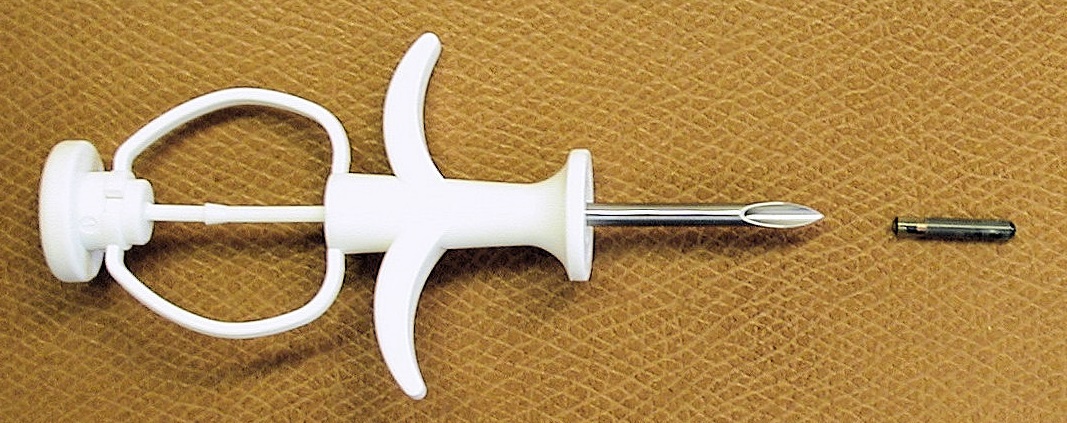
As discussed in Part One of my thoughts on compulsory microchipping, dogs are going to need to be chipped, by law, from 2016 onwards (in England - earlier than that in Scotland and Wales). Arguments in favour of compulsory chipping cover a range of outcomes, from cost savings, to making it easier to document hereditary health issues, to improving the ease and speed of reuniting owners with their lost pets.

By Reinraum  [Public domain], via Wikimedia Commons

But the argument that compulsory microchipping will "improve traceability generally"  is an interesting one. Admittedly, if a higher percentage of the pet population is chipped, then in theory it should be easier to reunite pet with owner. But as we can see from research, even if a microchip is found, in a significant proportion of cases the contact details associated with the chip are incorrect.

American researchers carried out a study at a local shelter to determine the impact of being microchipped on rates of return home. In all, of the microchipped animals arriving at the shelter, 72.7% were able to have their owners contacted. Of the remainder, the majority had incorrect contact details registered, or the owner couldn't be contacted through the given details, with a much smaller proportion having a chip that wasn't registered in any database. This last is less of an issue in the UK, as the action of inserting the chip and the action of registering the animal are both done by the vet at the same time. In the US, the owner is often left to carry out the registration.


By Steffen Heinz (Caronna 14:47, 20 February 2007 (UTC)) (Own work) [GFDL (http://www.gnu.org/copyleft/fdl.html), CC-BY-SA-3.0 (http://creativecommons.org/licenses/by-sa/3.0/) o via Wikimedia Commons

On top of this, the issue of traceability is muddied by the fact that many vets don't scan new patients for existing microchips, and rescues are under significant time and financial pressure, sometimes meaning that pets aren't scanned as thoroughly as would be ideal. Couple this with the fact that there is no obligation for the Highways Agency or local council to scan deceased pets on the roads, and that a microchip doesn't act as proof of ownership, and suddenly using a microchip to identify and return your pet becomes a lot less clear cut.

In the UK, there is a campaign called "Vets Get Scanning" to raise awareness of these issues. Initially I was sceptical as to the value, since I (wrongly) assumed that every agency associated with stray animals and animal welfare would scan as a matter of course, but this assumption turned out to be spectacularly incorrect. I've also come across some horror stories of the owner having done everything right but the chip not having been read within the statutory seven days when a straying animal is held and so the animal passing into the rescue network and being rehomed or worse.  It seems like such a small thing, to make it at the very least "best practice" to scan a new dog at the time of registration with a vet, or (if at all possible) if it is unfortunately found deceased.

The Vets Get Scanning group also believe that a microchip should act as proof of ownership. At the moment, it does not, which leads to issues where an animal is passed on to a new owner having entered the rescue network after straying or having been stolen, and the chip shows up as being registered to another person. Data Protection laws prevent the old owner being given any details of where the dog is now, and as a result if they are notified that a dog registered in their name has turned up, the original owner has to resort to legal action to get the name of the new owner released, and potentially go to the small claims court to get the dog back. While I have no problem with the data protection law as it stands, it seems a little silly that there has to be a legal dispute over the ownership of the dog, when the original owner's details are on the chip.