Showing posts with label microchip. Show all posts

Tuesday, 9 September 2014

Compulsory Microchipping (part 2)

As discussed in Part One of my thoughts on compulsory microchipping, dogs are going to need to be chipped, by law, from 2016 onwards (in England - earlier than that in Scotland and Wales). Arguments in favour of compulsory chipping cover a range of outcomes, from cost savings, to making it easier to document hereditary health issues, to improving the ease and speed of reuniting owners with their lost pets.

By Reinraum  [Public domain], via Wikimedia Commons

But the argument that compulsory microchipping will "improve traceability generally"  is an interesting one. Admittedly, if a higher percentage of the pet population is chipped, then in theory it should be easier to reunite pet with owner. But as we can see from research, even if a microchip is found, in a significant proportion of cases the contact details associated with the chip are incorrect.

American researchers carried out a study at a local shelter to determine the impact of being microchipped on rates of return home. In all, of the microchipped animals arriving at the shelter, 72.7% were able to have their owners contacted. Of the remainder, the majority had incorrect contact details registered, or the owner couldn't be contacted through the given details, with a much smaller proportion having a chip that wasn't registered in any database. This last is less of an issue in the UK, as the action of inserting the chip and the action of registering the animal are both done by the vet at the same time. In the US, the owner is often left to carry out the registration.


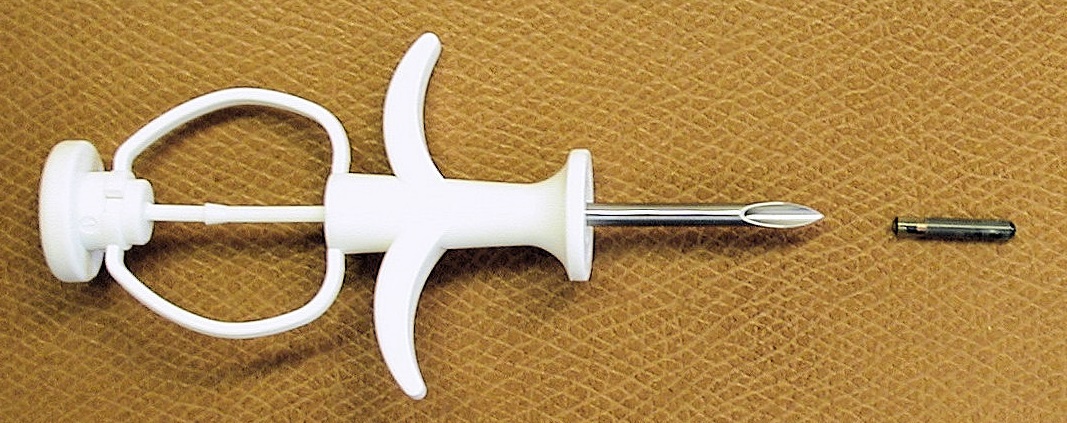
By Steffen Heinz (Caronna 14:47, 20 February 2007 (UTC)) (Own work) [GFDL (http://www.gnu.org/copyleft/fdl.html), CC-BY-SA-3.0 (http://creativecommons.org/licenses/by-sa/3.0/) o via Wikimedia Commons

On top of this, the issue of traceability is muddied by the fact that many vets don't scan new patients for existing microchips, and rescues are under significant time and financial pressure, sometimes meaning that pets aren't scanned as thoroughly as would be ideal. Couple this with the fact that there is no obligation for the Highways Agency or local council to scan deceased pets on the roads, and that a microchip doesn't act as proof of ownership, and suddenly using a microchip to identify and return your pet becomes a lot less clear cut.

In the UK, there is a campaign called "Vets Get Scanning" to raise awareness of these issues. Initially I was sceptical as to the value, since I (wrongly) assumed that every agency associated with stray animals and animal welfare would scan as a matter of course, but this assumption turned out to be spectacularly incorrect. I've also come across some horror stories of the owner having done everything right but the chip not having been read within the statutory seven days when a straying animal is held and so the animal passing into the rescue network and being rehomed or worse.  It seems like such a small thing, to make it at the very least "best practice" to scan a new dog at the time of registration with a vet, or (if at all possible) if it is unfortunately found deceased.

The Vets Get Scanning group also believe that a microchip should act as proof of ownership. At the moment, it does not, which leads to issues where an animal is passed on to a new owner having entered the rescue network after straying or having been stolen, and the chip shows up as being registered to another person. Data Protection laws prevent the old owner being given any details of where the dog is now, and as a result if they are notified that a dog registered in their name has turned up, the original owner has to resort to legal action to get the name of the new owner released, and potentially go to the small claims court to get the dog back. While I have no problem with the data protection law as it stands, it seems a little silly that there has to be a legal dispute over the ownership of the dog, when the original owner's details are on the chip.

Monday, 25 August 2014

Compulsory Micrchipping (Part 1)

Microchipping of pet dogs is set to become law in the UK as of April 2016. It's been put forward by several bodies, including the Department for the Environment, Food and Rural Affairs, and the British Veterinary Association that this will:
  • make it much easier to reunite lost pets with their owners
  • assist with the reporting of hereditary health problems
  • act as a key part of the identification for a "pet passport" (and indeed has been a requirement for a dog that is being issued with travel documents since the scheme came in in 2001)
  • protect the welfare of pet dogs by encouraging responsible dog ownership
  • decrease the amount spent on recovering lost and stolen pets (currently £33 million a year)
  • bring dogs and owners back together more quickly and effectively
  • Improve the current situation surrounding stray dogs by minimising the need for unidentified lost dogs to be rehomed
  • Improve traceability generally
All this seems like a great idea, and with 60% or more of pet dogs already being microchipped (the number varies a bit depending on which data set you use - SAVSNET suggests just under 60%; a small recent survey by Animal Friends thinks a little over that), there aren't that many to go until the entire population of just over 8 million pet dogs in the UK is covered. But then what?

"Microchip rfid rice". Licensed under Public domain via Wikimedia Commons -
If we look at the Dog's Trust annual Stray Dog Survey for 2013, it looks like of the 112,000 strays handled by local authorities, around 48% of them were returned to their owners. Optional data provided on the dogs (in this case filled out on around 1 in 10 animals) showed that 11% were microchipped. While that 11% might not be completely right (only 1 in 10 strays had the additional data), if it is close to correct for the data set as a whole then there is a large discrepancy between the percentage of the population of dogs that stray, and the percentage of dogs that are microchipped. All else being equal, you'd expect to see 60% chipping in the general population, and 60% chipping in the straying population. As it is, we have 60% of pet dogs with a chip, but only 11% of dogs in the straying population chipped, suggesting that unmicrochipped dogs are more at risk of being part of the "stray population" than an microchipped dog.
Of the strays dealt with by the local authority, 48% got back to their owners. For those with the optional data filled in (a data set of 20, 976 dogs), 44% were reunited when the owner contacted the pound, 40% by a microchip, 5% by disc details on a collar and 4% by microchip + tag together. What this shows is that microchipping works to get an pet dog returned to its owner - as long as the information held in the microchip database is correct.

The statement that microchipping will help with the reporting of hereditary health problems is likely to be true, though difficult to quantify. The microchip acts as a unique and permanent record of the dog's identity, and thus, data protection rights permitting, any problems can be added to the relevant breed and condition databases either by the owner or by the vet. The issue that I have with this is that these health problems occur almost overwhelmingly in pedigree animals. These animals are already identified by their Kennel Club name and pedigree and, while it's possible to envisage the substitution of one animal for another, it is unlikely to take place for the simple reason that these databases exist at all thanks to the efforts of breed enthusiasts who care about their dogs. It undermines their credibility intensely to suggest that permanently recording the dog's ID via a microchip makes it more likely that accurate hereditary data will be recorded by ensuring the dog under test is the right one.

Microchipping as a way of ensuring the right dog is being transported under the pet passport scheme is already uncontroversial, though as of later this year travellers apparently need to expect larger numbers of spot checks in Europe, and if moving more than five pets together need to make use of a professional transporter (attending shows excluded). See gov.uk guidance.

Onto the aim of compulsory microchipping that is, to my mind, most troubling. A majority of pet dogs are already microchipped on a voluntary basis, and making it compulsory will pick up the majority of the rest that come from responsible breeders or pass through a rescue. But looking at the statistics on stray dogs, it already appears that not having your pet microchipped is consistent with it being more likely to stray. Are the people who allow their dogs to stray going to have their dogs chipped? Or do we run the risk of those dogs coming into the stray system and simply being abandoned because the owner realises that they need to run foul of the law on compulsory microchipping to get their dog back? In a similar vein, rescues are already over run with Staffy-type dogs, bred to be a status dog or to make a quick buck from selling puppies. Realistically, what are the chances that this situation will change, just because an extra law is involved? These dogs are already being bred without their best interests at heart: if they are already treated as disposable I don't believe having them microchipped will change that.

The Microchipping Alliance (who don't seem to have a website online, but are referenced by a large number of involved parties, including the Kennel Club, Dogs Trust, PDSA, Blue Cross and DogLost, among others) think that annual cost savings to local authorities relating to dog welfare alone could be between £20.8 million and £23.2 million from the first year of introducing legislation. I think, from reading several briefing documents put out by the alliance member bodies, this is primarily due to speed and ease of reuniting a microchipped animal with its owner, and the decrease in number of animals that then have to go into kennels and/or rescue - as supported by bullet points 6 and 7 above, which are statements taken from the the Microchipping Alliance response to the government announcement of the introduction of compulsory chipping.

The last outcome of compulsory chipping is also worthy of further consideration. "Improving traceability more generally" could be any one of a multitude of things,  and is the subject of part 2 of this post, in which I'm looking at what happens when your lost animal is chipped and for some reason it isn't scanned, and whether compulsory chipping will change that.


Saturday, 16 August 2014

Check your chip!


It was National Check the Chip day in the USA yesterday, and even though I'm UK based (and we have the whole month of June to raise awareness of having your pet microchipped) it made me think about microchipping, and what it actually is.

As with many (even most) people reading this, I have my dogs microchipped. Mine were both done by the rescues they came from; often it is done by the breeder's vet, or as routine when your pup is in for second vaccination.

Placing a microchip involves implanting a tiny (the size of a grain of rice) passive Radio Frequency Identification transponder under the animal's skin, usually between the shoulder blades. The chip is made up of several elements - on the outside there is a bioglass case, which is biologically inert (ie won't react with the body) and means the chip won't affect the animal in the future. Some types of chip have a polypropelene polymer "cap" over the glass casing, which stimulates the growth of collagen fibres around the implant and preventing migration, but not all do (How Stuff WorksIdentipet). Even without this, the risk of the microchip moving is low (see AVMA Microchipping Background Information for summary of numbers of migrations)

Inside the glass case, there is a silicon data chip, which holds the microchip number, and an antenna and a capacitor. The microchip is "passive" (ie has no power source) and so in order to be read, the capacitor receives power from a scanner set to the correct frequency. The transponder uses the power to send the data held by the silicon chip, via the antenna, to the scanner - the whole process of reading the chip takes about 0.6 sec.

Having your dog microchipped is going to become a legal requirement of ownership as of April 2016 in England (March 2015 in Wales), with penalties for not complying. It makes sense to have your dog chipped anyway though, legal requirement or not, as it massively increases the chances of having your pet returned to you if it strays - a study carried out in the USA in 2009 showed that dogs without microchips were returned to their owners 21.9% of the time, whereas microchipped dogs were returned to their owners 52.2% of the time. Cats without microchips were reunited with their owners only 1.8% of the time, whereas microchipped cats went back home 38.5% of the time (AVMA Microchipping FAQ). The majority of chipped dogs that didn't get home were cases where the owners had forgotten to update their details at the chip registry - and this is the focus of "check the chip" day.

Data released by the Dogs Trust (and supported by SAVSNET) indicates that around 60% of dogs in the UK are currently microchipped, so there's still room for improvement in overall numbers. However, there isn't any data on how many chipped dogs here in the UK currently can't get back to their owners because the owner data is wrong - but it's distressing how commonly I see the local dog wardens posting "found" pictures and commenting that the dog has a chip but the phone number is incorrect. You don't want that to be your dog - so it's worth making sure your details are up to date. The best place to start in the UK is with Petlog: the umbrella chip registry run by the Kennel Club, and with Pet Microchip Lookup run by AAHA in the US